
From Campus to Corporate with Ellaby Hansen (Fr 2020)
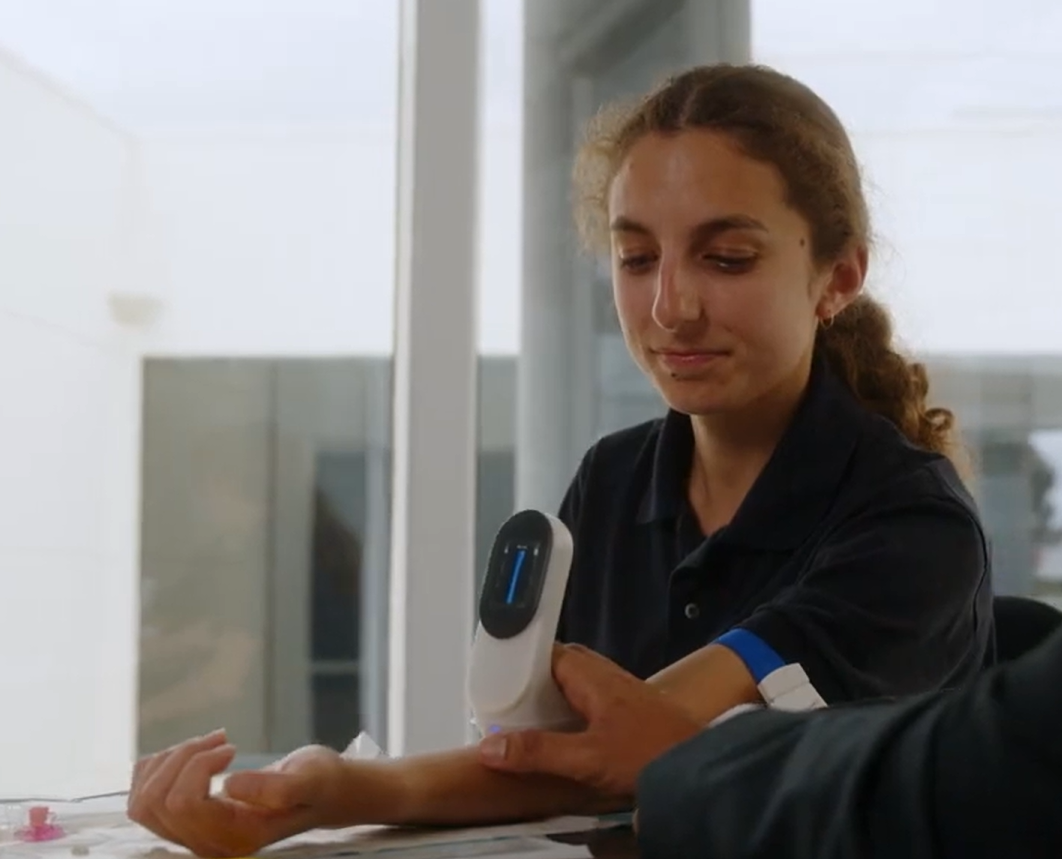
Ellaby with VeinWise, a handheld ultraportable unit designed to find vein pathways at depth.
Ellaby Hansen (Fr 2020) returned to St Catherine’s this semester for a Campus to Corporate session with residents from UWA and Curtin.
Medical and nursing students formed a strong cohort, with the question session continuing well beyond the presentation itself.
Ellaby shared reflections on her pathway from student life at St Catherine’s into medical technology and MedTech careers, including research placements, internships and her current role at VeinTech.
We caught up with her afterwards to speak about her time at the College, working in MedTech and the advice she would give students navigating career direction.
Q&A with Ellaby Hansen
Looking back, what stands out to you about your time at St Catherine’s College?
Definitely the people I was surrounded by. Being a resident at St Catherine’s placed me in an environment filled with driven and thoughtful people. You couldn’t help but feel inspired by the people around you, and that created a real sense of community.
The connections I made at College have had a lasting impact on both my studies and career.
Were there any moments or experiences at the College that shaped you?
Starting university and moving into College only a few weeks before the COVID-19 lockdowns really reinforced the importance of having the right people around you.
“You couldn’t help but feel inspired by the people around you, and that created a real sense of community.”
What could have been a stressful and uncertain time ended up becoming one of the most memorable periods because of the community around us. We kept each other accountable through online university, but we also made sure there was plenty of fun along the way.
What first drew you towards biomedical engineering and medical technology?
I was drawn towards biomedical engineering late in high school. I always enjoyed maths and physics, but I never really saw myself fitting into the more traditional engineering disciplines.
Biomedical engineering appealed to me because it combined problem solving with the chance to have a direct impact on people.
What does your work at VeinTech look like day to day?
Being part of a startup means every day looks very different because we all wear many hats.
Depending on the stage of the project, my days can range from running hospital studies with clinicians using our prototype device through to creating tissue simulation models in the lab. Data analysis and report writing are also a big part of the role.
What skills have been most useful in your role so far?
Understanding risk and how it can be managed has been one of the most useful skills from my degree, particularly working in MedTech.
Working closely with different people and perspectives has also been incredibly important, especially within a small team environment.
How have you found working in engineering and medical technology so far?
I’ve really enjoyed the fast-paced and constantly changing nature of the MedTech startup environment. The team at VeinTech has also been incredibly supportive early in my career.
What advice would you give students who feel unsure about their career direction?
Try to expose yourself to as much as possible during your degree, whether that’s through volunteering, internships or speaking with people already working in the field.
It’s difficult to understand what a career might actually look like while you’re still at university, so opportunities to connect with recent graduates and industry professionals can make a real difference.
Expand your world. Book a College tour.