
In Conversation with Professor Rosamond McKitterick
We sat down with Professor Rosamond McKitterick (FR 1967), one of the world’s leading historians of the early Middle Ages and Professor Emerita of Medieval History at the University of Cambridge, whose scholarship has reshaped understanding of the Carolingian world, writing, and the transmission of knowledge. A former Chair of Medieval History at Cambridge and a Heineken Prize laureate recognised for research that “fundamentally changed” how the Carolingians are understood, she reflects here on the beginnings of her academic journey and the experiences that shaped a distinguished international career.
You were born in England and moved to Western Australia as a child. What do you remember most clearly about those early years?
I was born in Chesterfield, Derbyshire, in 1949. Still, my earliest memories are of Cambridge, where my family moved in 1951 when my father became Chaplain and College Lecturer in Theology at Magdalene College, University of Cambridge. This was a five-year fixed-term post.
Among the jobs my father applied for in 1956, one he was offered and found particularly attractive was the position of head of a new Theological College being established to train priests in Western Australia. This is how we became ‘£10 Poms’, sponsored by the Church in Australia’s Assisted Migrant Scheme and crammed, along with 2,000 others, into the SS Orsova, which set sail for Fremantle at the beginning of September 1956.
Men and women, boys and girls were segregated, families were separated, we were six to a cabin, and there were strict luggage limits. Because of the Suez crisis, we had to sail around the Cape of Good Hope instead of taking the usual shorter route through the Mediterranean and the Suez Canal. We arrived in Fremantle on 5 October 1956 after a five-week voyage.
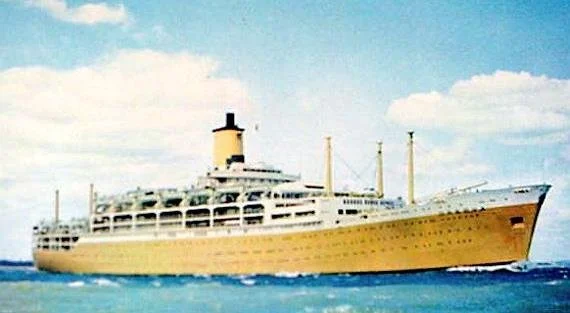
The SS Orsova (1956)
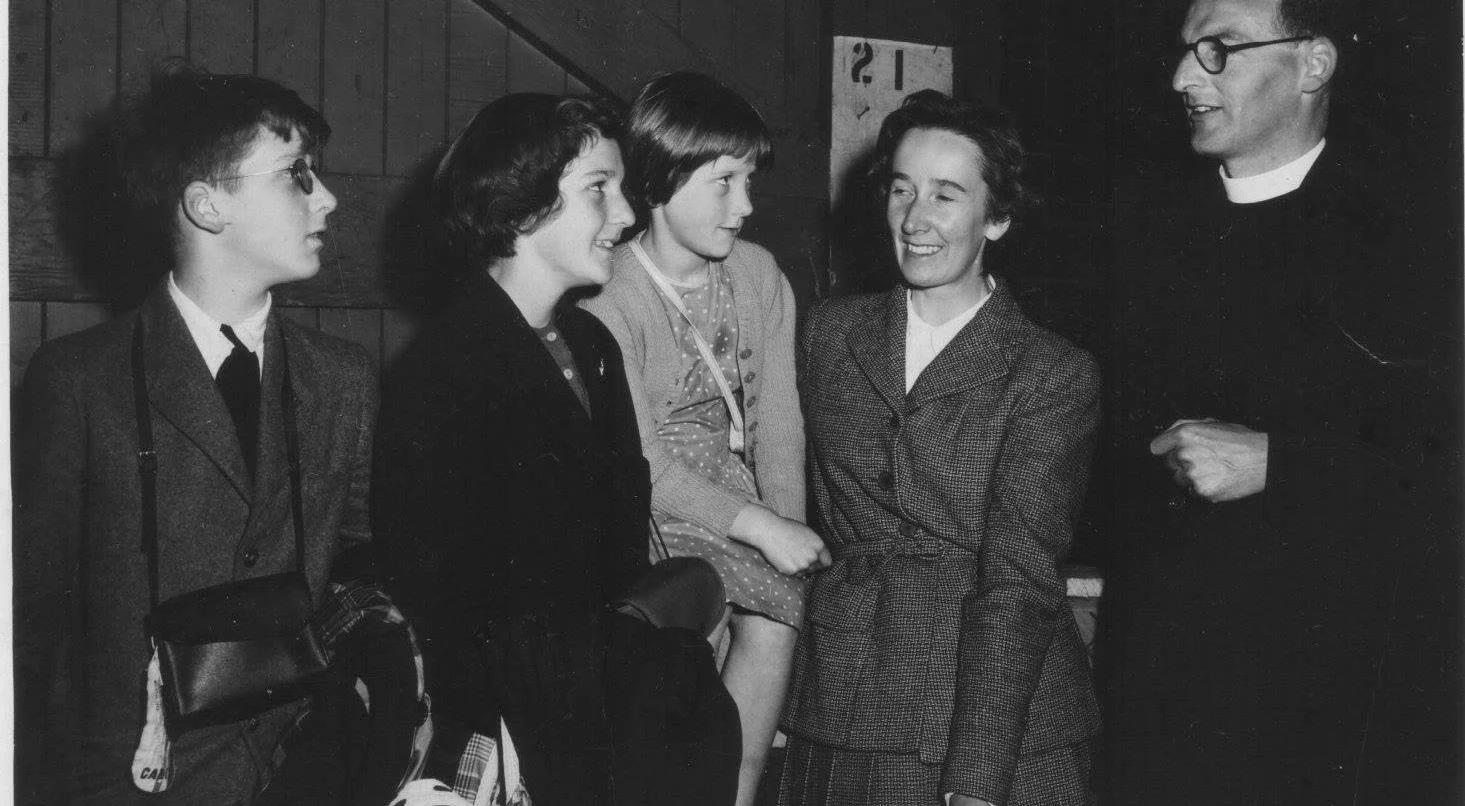
The Pierce family in 1956 (L-R) Charles, Judith, Rosamond, Melissa and Tony
What led you to study at the University of Western Australia (UWA) and to join St Catherine’s?
At that stage, there was not much choice when it came to university. UWA was the only university in Western Australia, and it was still unusual in the late 1960s to study interstate. I was fortunate to receive a Commonwealth University scholarship, which covered both tuition and College accommodation.
St Catherine’s, the only residential college then admitting women, also had an excellent reputation under the leadership of Patricia Church. My father also regarded residence in a College as the natural way to leave home for university, as he himself had done at Cambridge. In any case, my family lived in a part of Perth from which daily commuting was not easy.
How did your time at UWA and St Catherine’s broaden your world?
My four years at UWA and St Catherine’s College were very happy ones. I loved the subjects I studied. It was at UWA, too, that I encountered an exhilarating mix of people among both staff and students that I had not experienced to the same extent at school (St Hilda’s): men and women from across Western Australia, a few from the eastern states, and other migrants from all over Europe.
I began to become properly aware of diverse cultures, and of very different pasts and perceptions of those pasts in contact with one another. Australia’s ‘White Australia Policy’ was still in force, but the University benefited in that period from Colombo Plan scholarships, which brought a quota of students from South and Southeast Asia. In my first year, I was lucky enough to be in the same part of College as young women from Vietnam, Thailand and Cambodia who were studying natural sciences, medicine, engineering and economics. They taught me a great deal, including how to cook rice properly.
Student politics was very active then, and both Dr Carmen Lawrence AM and Dr Sue Boyd AM were at St Catherine’s. I did my fair share of marching in protest against the war in Vietnam, conscription and exclusionary rules. Along with most of the residents of St Catherine’s and others from College Row, and led by Sue Boyd, then President of the Guild of Undergraduates, we stopped the rush-hour traffic with a sit-in at the junction of Stirling Highway and Mounts Bay Road to demand a pedestrian tunnel. It worked. I was also elected to the Council of the Guild of Undergraduates and served as Secretary when Kim Beazley, later leader of the Australian Labor Party, was President.
What did you study at UWA, and were there particular lecturers or courses that shaped your thinking?
The degree course was organised so that one studied four different subjects in the first year before beginning to specialise. In my first year, I read medieval history, English literature (mostly twentieth-century), Latin and Philosophy. In my second year, my papers were seventeenth- and eighteenth-century English literature, early modern European history, including Humanism, and Southeast Asian history. In my third and fourth years, I read for the Honours degree, taking papers on Dark Ages Britain, the Carolingian Renaissance and fifteenth-century Europe.
I had become interested in medieval history while still at school through private reading, as it was not taught there. It was particularly fortunate, therefore, that UWA’s Classics and History departments had so many excellent classicists and medievalists. I owe much, especially to Dr Isabel Durack, Garry Trompf, Herbert Hallam and James Willis, for their intellectual rigour, the curiosity they encouraged, and the adventurousness they stimulated. They laid the foundations for the critical thinking and analysis of texts from which I have benefited throughout my career.
When did you realise that early medieval history would become your field?
Although I greatly enjoyed Dr Durack’s Honours course on fifteenth-century Europe, it was Herbert Hallam’s two courses on Dark Ages Britain and the Carolingian Renaissance that introduced me to the early Middle Ages and the fascination of working on this period. It represented, and still represents for me, an astonishing example of cultures in contact, with a potent combination of political and cultural ambitions and the assimilation and selection of the Greco-Roman and Judaeo-Christian inheritance within the post-Roman successor states that formed Europe.
There was some perverseness involved, for I found it much more difficult than anything else I had studied, except perhaps Formal Logic. Technically, this period also imposes additional demands in terms of the languages needed to study it, as well as the special character of the original manuscripts and documentary records from more than a thousand years ago. So much still seemed to be unknown, and so much was uncertain and open to interpretation. I found, and still find, this lack of certainty very stimulating and attractive. It is also a forceful reminder of how dependent all historians are on their evidence, and of how time, accident, and the deliberate selection of what was preserved in archives and libraries affect the surviving sources of knowledge.
I wrote my undergraduate dissertation on the political thought of John of Salisbury, a twelfth-century intellectual who sided with Thomas Becket. Indeed, when I applied to Cambridge for doctoral work halfway through my two-year Honours course, my stated intention had still been to work on twelfth-century intellectual history. By the time I graduated, however, I was a committed early medievalist.
My wish to return to England had been growing ever since my family’s arrival in Australia, and it gradually became clear that the way back would be through an academic scholarship for postgraduate study. In early autumn 1971, after almost a full academic year as a Temporary Tutor in UWA’s History Department, teaching first- and second-year courses, I arrived in Cambridge to begin a PhD. For me, it was coming home.
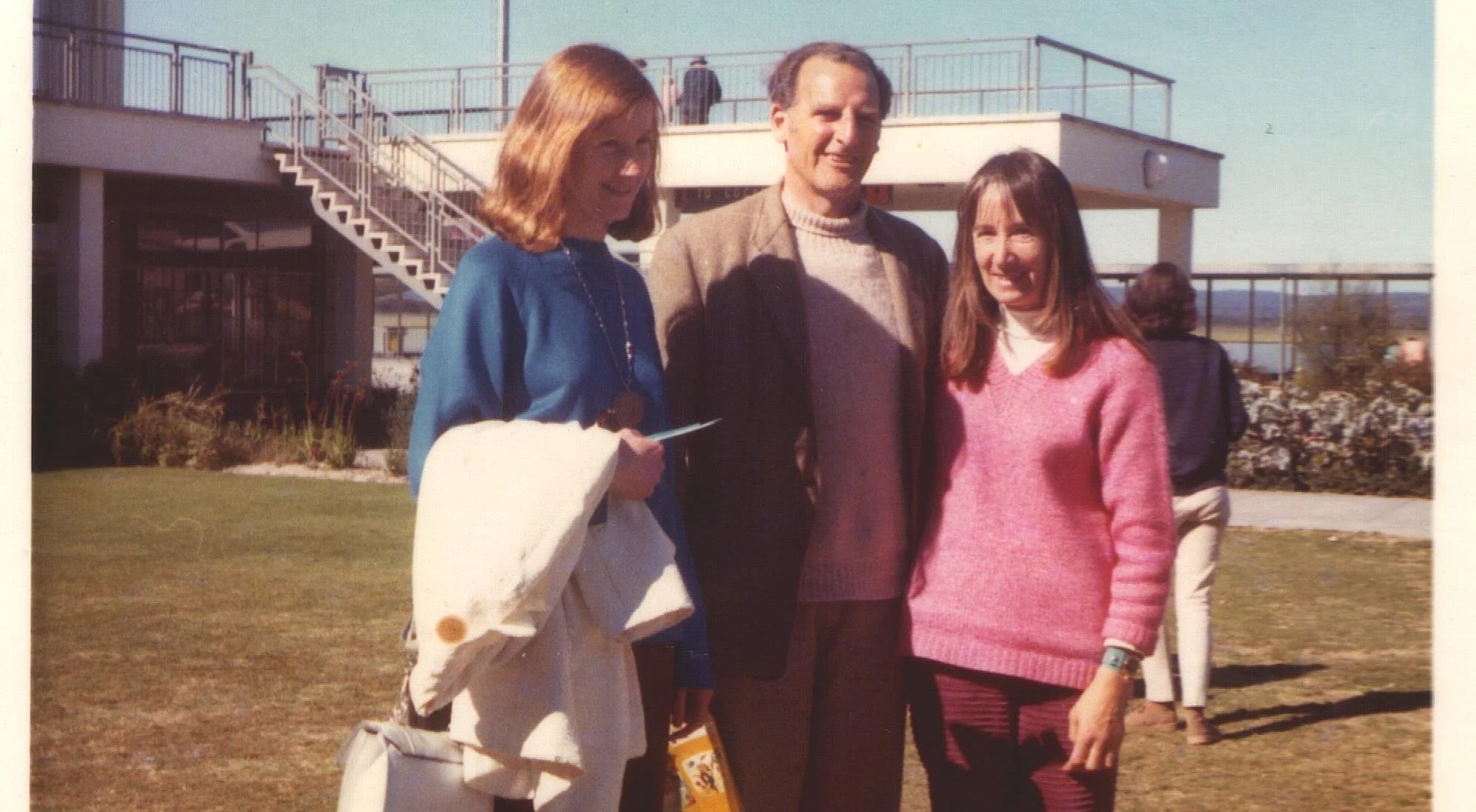
Rosamond and her parents at Perth Airport (1971)
What first drew you to the study of medieval manuscripts, and what continues to captivate you about this field?
In 1967, as a fresher climbing to the top floor of the University Library to the medieval history section, I encountered on the low shelves at the top of the stairs the monumental Codices Latini Antiquiores (CLA), edited by Elias Avery Lowe. This twelve-volume guide to Latin manuscripts before 800 contains descriptions and full-size illustrations of more than 1,800 surviving manuscripts and fragments. It showed how one could identify a manuscript’s location and date from its script and material features. I was then, and remain, riveted by the way letter forms and handwriting can reflect profound cultural transformation. These manuscripts are crucial evidence for cultural transmission and knowledge.
Those CLA volumes, I am happy to say, survived the famous earthquake two years later, which brought the rest of the stacks on the top floor of the Reid Library tumbling down, and I am now the proud owner of a complete set.
It was Alan Bishop, Reader in Palaeography in my first year as a graduate student at Cambridge, who further fed my fascination with the evolution of script. He was a shy man, but so precise and knowledgeable that I learnt an enormous amount from him, especially in special classes in codicology with original ninth-century manuscripts in the University Library. Listening to him explain what kind of exemplar a scribe may have worked from was a revelation.
The principal manuscript work for my thesis, however, was done in Munich, where I studied in 1974–75 with the great palaeographer Bernhard Bischoff and examined manuscripts almost daily in the Bayerische Staatsbibliothek. That experience consolidated my understanding of the importance of going beyond printed texts to the original manuscript, and of considering the cultural and social context in which they were produced.
I remain fascinated by the communicative power of words and letter forms across time and space. That understanding of manuscripts as material and historical evidence has underpinned my work ever since, and it initially resulted in the publication in 1989 of The Carolingians and the Written Word.
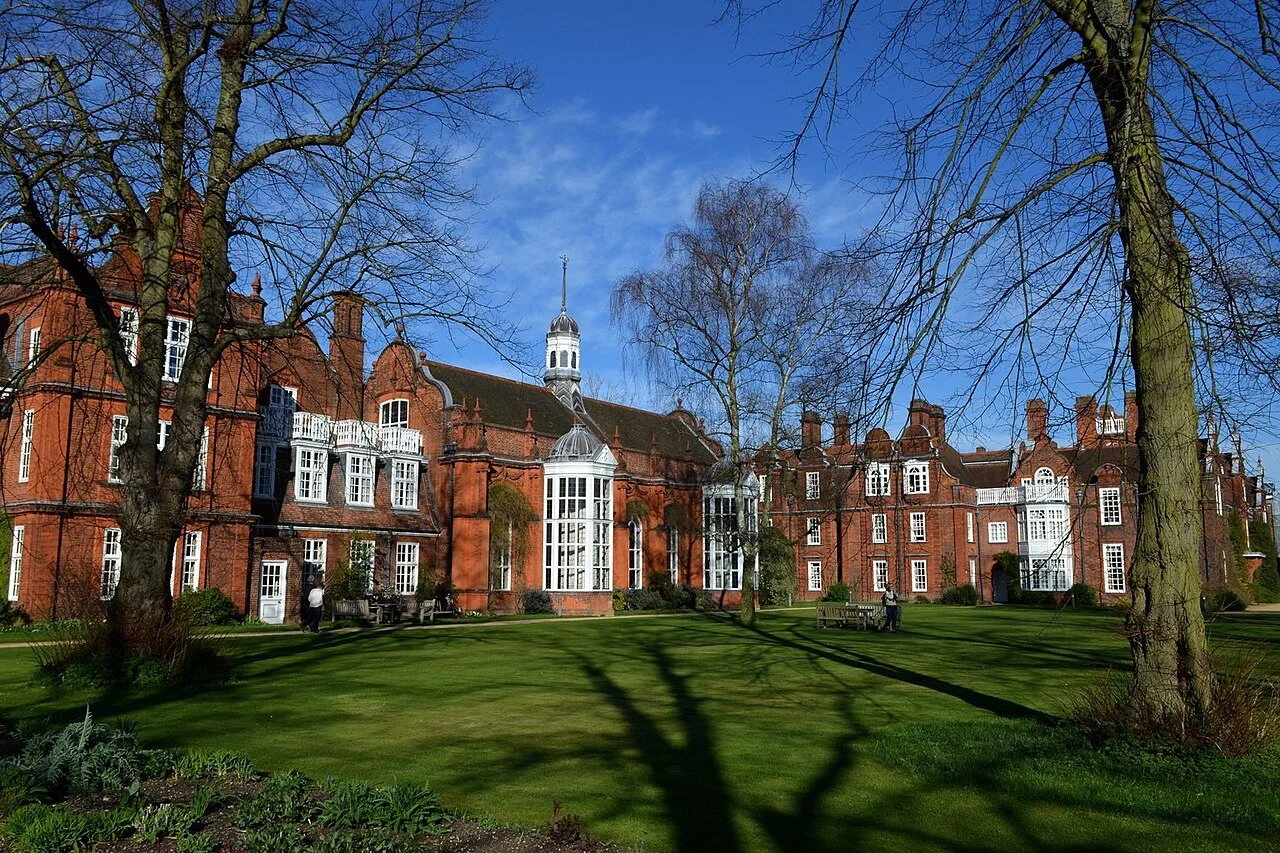
Rosamond was a Fellow of Newnham College, Cambridge
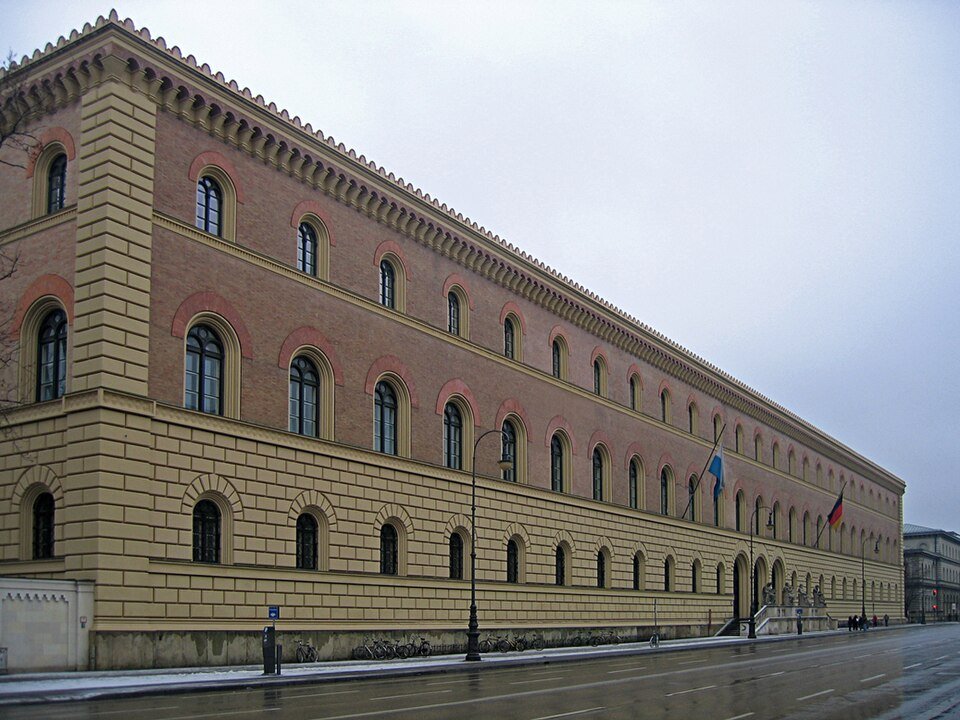
The Bavarian State Library in Munich, "Bayerische Staatsbibliothek”
How did teaching so widely at Cambridge deepen your perspective as a historian?
The first thing to stress is that I like knowing things. My appointment to an Assistant Lectureship in the Faculty of History at Cambridge from 1979 onwards required me to teach six hundred years of the history of western Europe and North Africa from late antiquity to the first millennium, as well as Byzantium and the Middle East in the same period. It was extraordinarily demanding, but also extraordinarily useful.
I had to take on board the principal sources and modern national historiographies of all those regions. I thus acquired a resource I might not otherwise have had, had I been given the dubious luxury of remaining a narrow specialist. I also acquired essential knowledge of the centuries preceding my own, which enabled me to identify at least some of the continuities and discontinuities. Such knowledge has, I hope, often saved me from the common pitfall of the specialist: assuming that important developments in one’s own period are their first manifestation.
What have you found most rewarding about teaching and mentoring students?
I have always loved teaching, at every level, from first-year undergraduates upwards. The forty-nine PhD students for whom I have acted as graduate supervisor, and the fifty-seven MPhil students, though fifteen of those went on to a PhD with me, have been an unfailing joy and source of inspiration. It is a source of great satisfaction that so many hold, or have held, academic posts in Britain, Hungary, Israel and North America, and that some are already full professors.
Similarly, my Advisory Editorship of Cambridge Studies in Medieval Life and Thought from 1990, and my General Editorship since 2003, as well as my founding and General Editorship of Cambridge Studies in Palaeography and Codicology from 1992 to 2003, ensured a constant flow of new work on every aspect of the Middle Ages. The privilege of working with so many young scholars on their first monographs has been immensely rewarding.
How have teaching, research and leadership informed one another across your career?
Throughout my career, there was always a close relationship between my teaching and my research, most fruitfully in my growing interest in perceptions and representations of the Roman past in the early Middle Ages. This was greatly stimulated by terms of leave at the British School at Rome in 2002 and the American Academy in Rome in 2011 and culminated in the last four years of my professorship at Cambridge, when I offered a Special Subject on the City of Rome and its rulers, 476–769.
I had never before taught a period, I was simultaneously exploring so actively myself. It turned out to be the most exciting course I ran. The outstanding and wonderfully enthusiastic undergraduates who asked questions and worked through the written and material sources with me, especially those relating to the late antique and early medieval popes in Rome, were endlessly challenging and stimulating. We also went on short but intense field trips to Rome each year. It was the students who encouraged me to write the book that became Rome and the Invention of the Papacy: The Liber Pontificalis, published in 2020.
The most rewarding aspect of my senior roles over the years has been facilitating the research of younger scholars as well as of my peers, whether as Director of Research in the Faculty of History at Cambridge or through service on British and international research funding and assessment bodies, especially in Austria, Germany, the Netherlands, Poland and Scandinavia, and for the British School at Rome. Some of this work involved panels across disciplines ranging from astronomy and quantum mechanics to biological anthropology and archaeology. It was enormously interesting, and together with my own participation in European research projects, it led to many enduring friendships and collaborations with colleagues around the world.
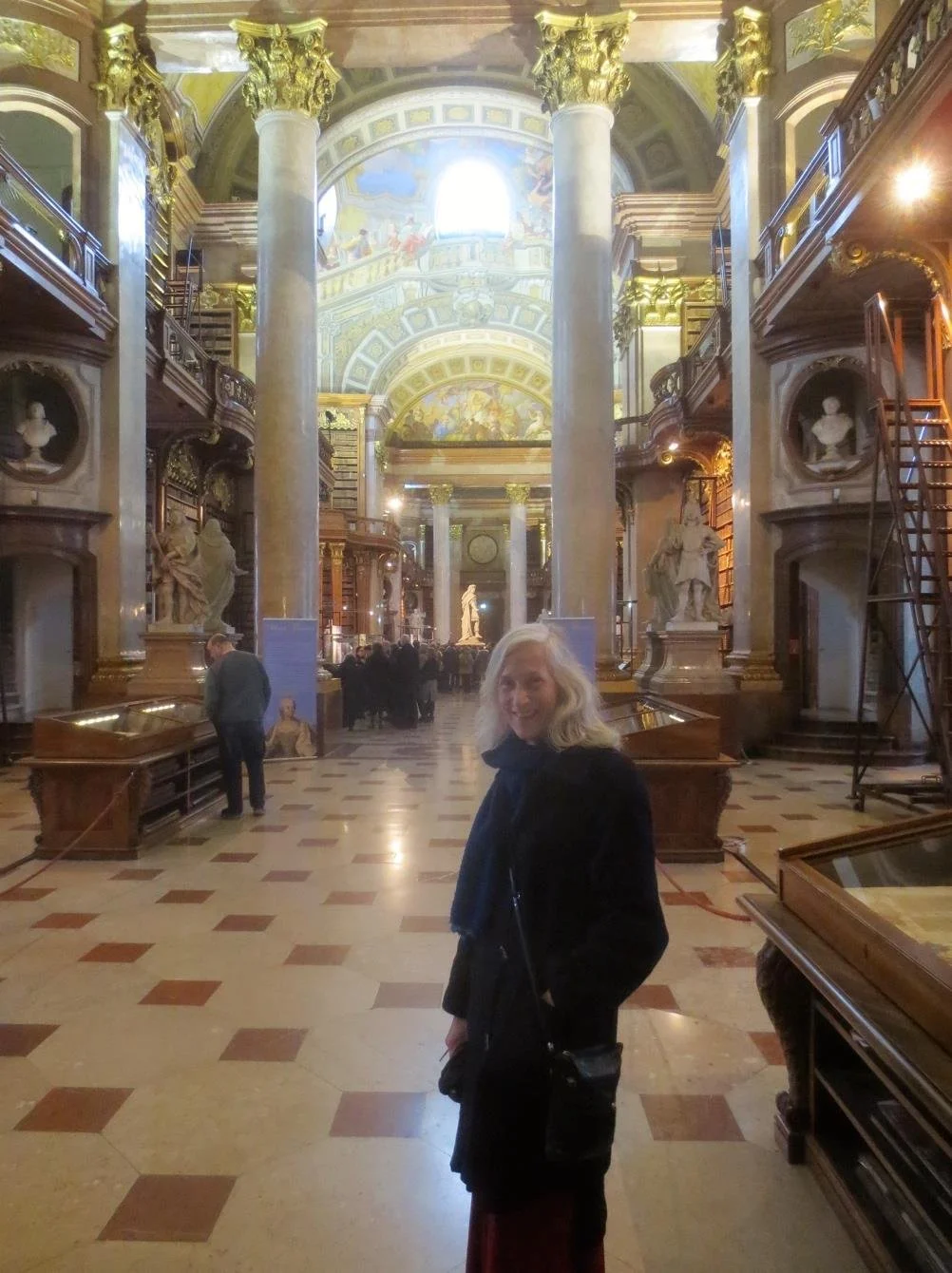
At the Österreichische Nationalbibliothek, Vienna (2012)
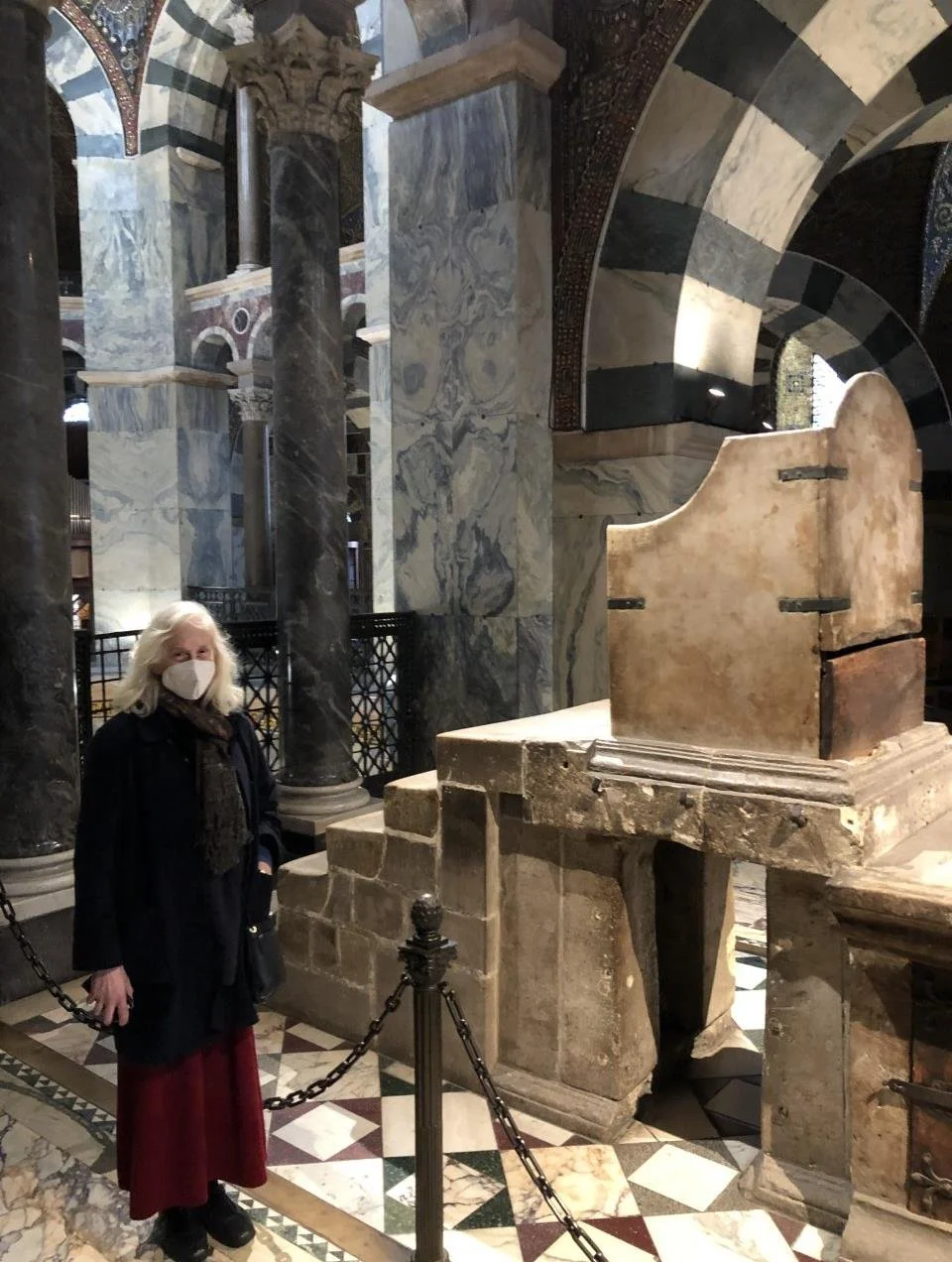
At the Palatine Chapel, Aachen (2021)
Do you see a connection between your education in Western Australia and the way you later approached research, teaching and collaboration?
I was fortunate that those who taught me seemed to assume I could think for myself. The idea that even a beginner might offer new and valuable insights, or ask awkward but useful questions, is often taken for granted. To me, that is fundamental to education as a genuinely mutual process between teachers and students, and to engagement with colleagues at every level.
Another aspect of my experience at UWA and St Catherine’s was the extent to which one was expected to assume responsibility, despite one’s relative youth. At UWA, I served as Secretary of the Guild of Undergraduates; at St Catherine’s, I was Senior Student in 1969 and a Tutor in 1970; and at Currie Hall, I was a Tutor for most of the 1971 academic year before leaving for Cambridge, still only 22 years old.
Many students at St Catherine’s today aspire to careers in research and academia. What advice would you offer them?
An academic life is hard work and highly varied. It is a way of life, requiring a level of engagement and commitment that goes well beyond any notional nine-to-five job. Academics must balance teaching, research and the essential administration that keeps the show on the road. It is, however, a privilege to be paid to do what one loves.
If research and teaching can enrich one another, the result can be immensely rewarding. The most successful and productive research careers I have observed are those that combine both, because the constant questioning and the need to explain and open new worlds to students are endlessly stimulating.
It is important, too, to remain flexible and adaptable: open to new ideas, new methods and new challenges. Sometimes the next step in a research career, especially through postgraduate grants or larger collaborative projects, may involve adapting one’s expertise to a different topic or acquiring new skills. One should not be afraid of that. You never know when a particular skill or body of knowledge may prove useful, open up new horizons, and make something else possible.
Be prepared, too, for some things not to work out. In the end, lasting impact depends on the quality of the work: the originality and importance of the research, the level of expertise achieved, the implications of the findings, and the contribution they make to knowledge.
Looking back, how important was St Catherine’s to your experience as a student?
St Catherine’s was a very supportive community. Our first task as students was learning and acquiring knowledge, but also gaining experience of many different kinds: socially, in running student organisations, and as members of sporting teams. We were all at an important stage of growing up and assuming responsibility. In relation to our University studies, College provided a solid and reliable base.
Being housed and fed so well, with the University facilities on the doorstep, was enormously valuable for both our studies and our social lives. Most of us were serious about our work, but we were also a social community, sharing ideas of all kinds through conversation and friendship.
We also had a great deal of fun. I was part of the first women’s boat to row at UWA, and we competed in the National Rowing Championship in New South Wales. We were lent a boat when we got there; alas, it was a tub, but we brought our own oars. Shan Ralph (now Callow), Sue Blackburn, and I travelled across the Nullarbor by train to Melbourne for the NUS Arts Festival in 1968. And then there were all the College Balls!
St Catherine’s had a strong identity when I was there. I am in no doubt that I would not have been as successful, nor as happy in my studies at UWA, had I not also been a resident at St Catherine’s.